
A school day a six‑year‑old can carry.
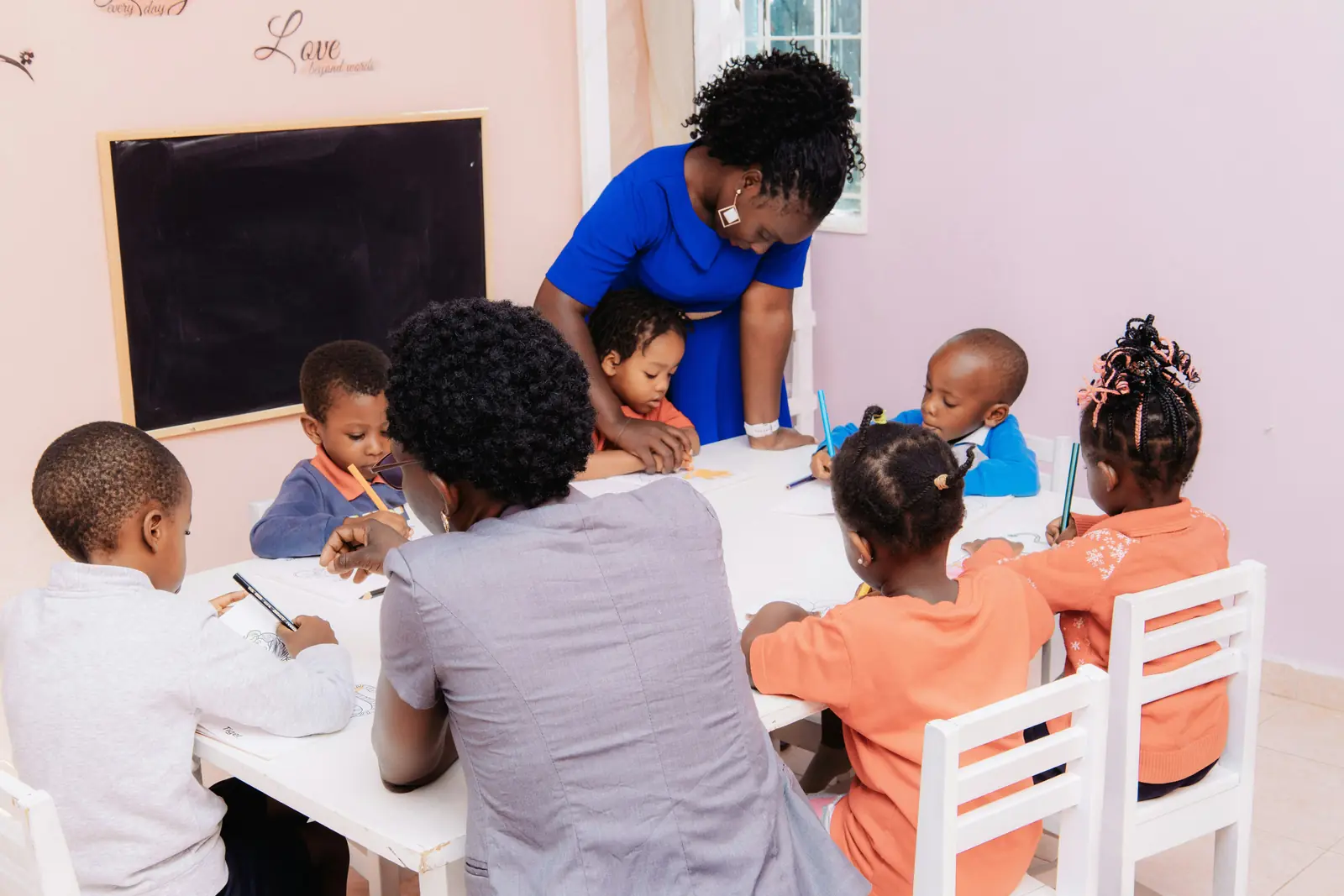
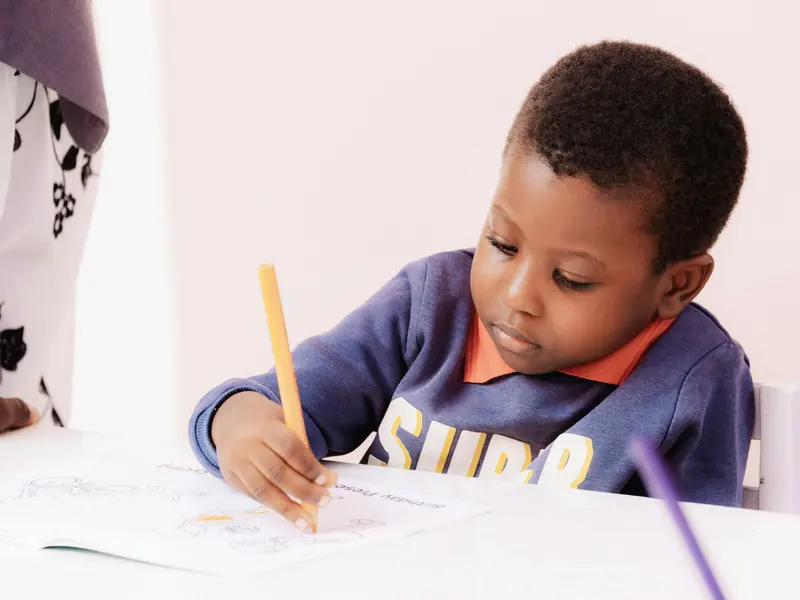
Ultimate Primary is a kindergarten, nursery and primary school in Akute for children aged two to eleven. Two streams a year group, no class above twenty-four, and a teacher who knows every child in the room by the second week.
- Ages
- 2 to 11
- Year groups
- KG 1 – Primary 5
- Class size
- Twenty-four at most
- Tours
- During lessons
Tuesday, Primary 3
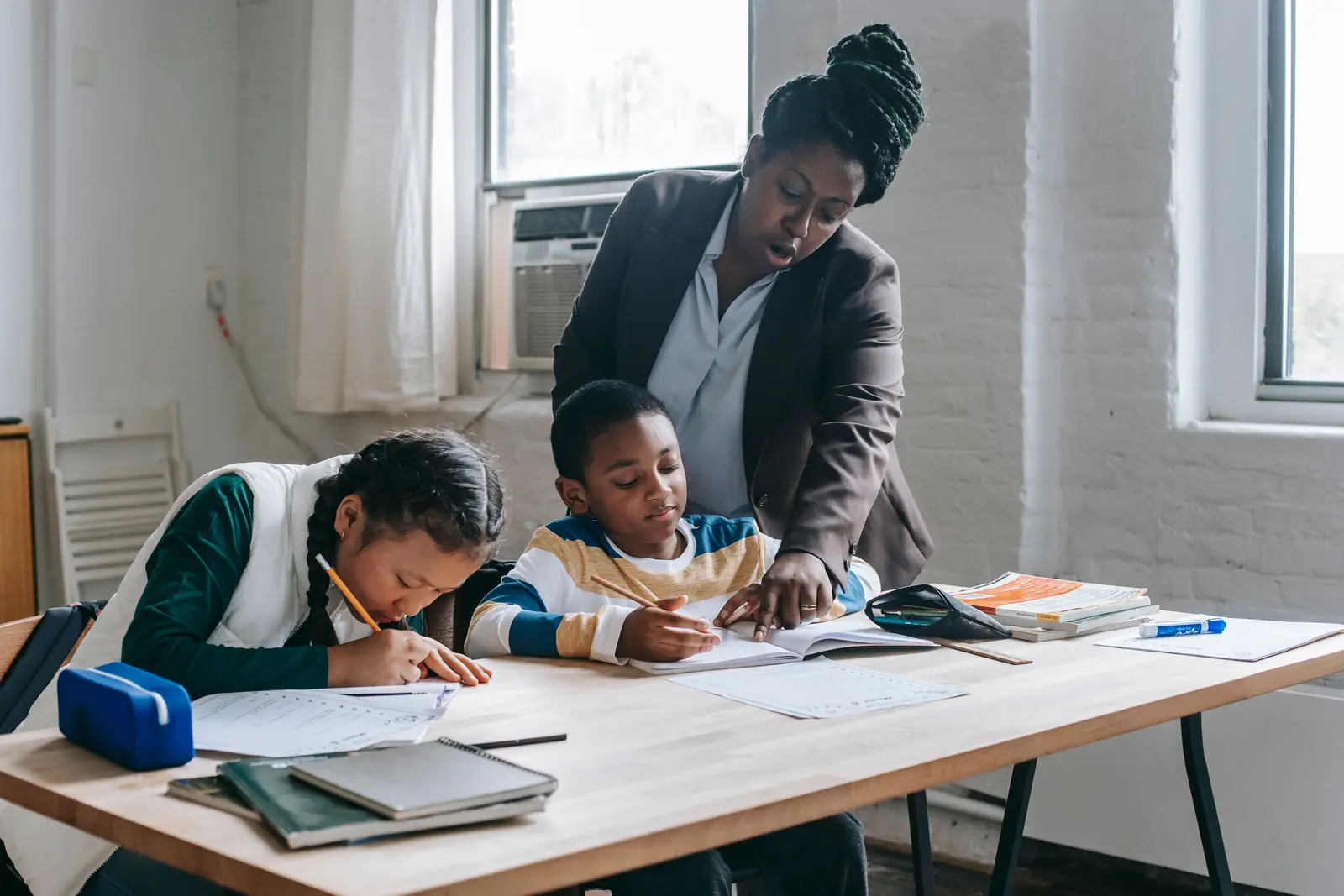
Every parent asks the same question on a tour: what does she actually do all day? This is the answer, in the order it happens.
- Gate and greetingA teacher stands at the gate, not a sign-in sheet. Late is noticed; so is a bad morning.
- Assembly, then readingThe first lesson of every day is reading, because it is the one everything else waits on.
- MathematicsWritten work in the morning while attention is long, not after lunch when it is not.
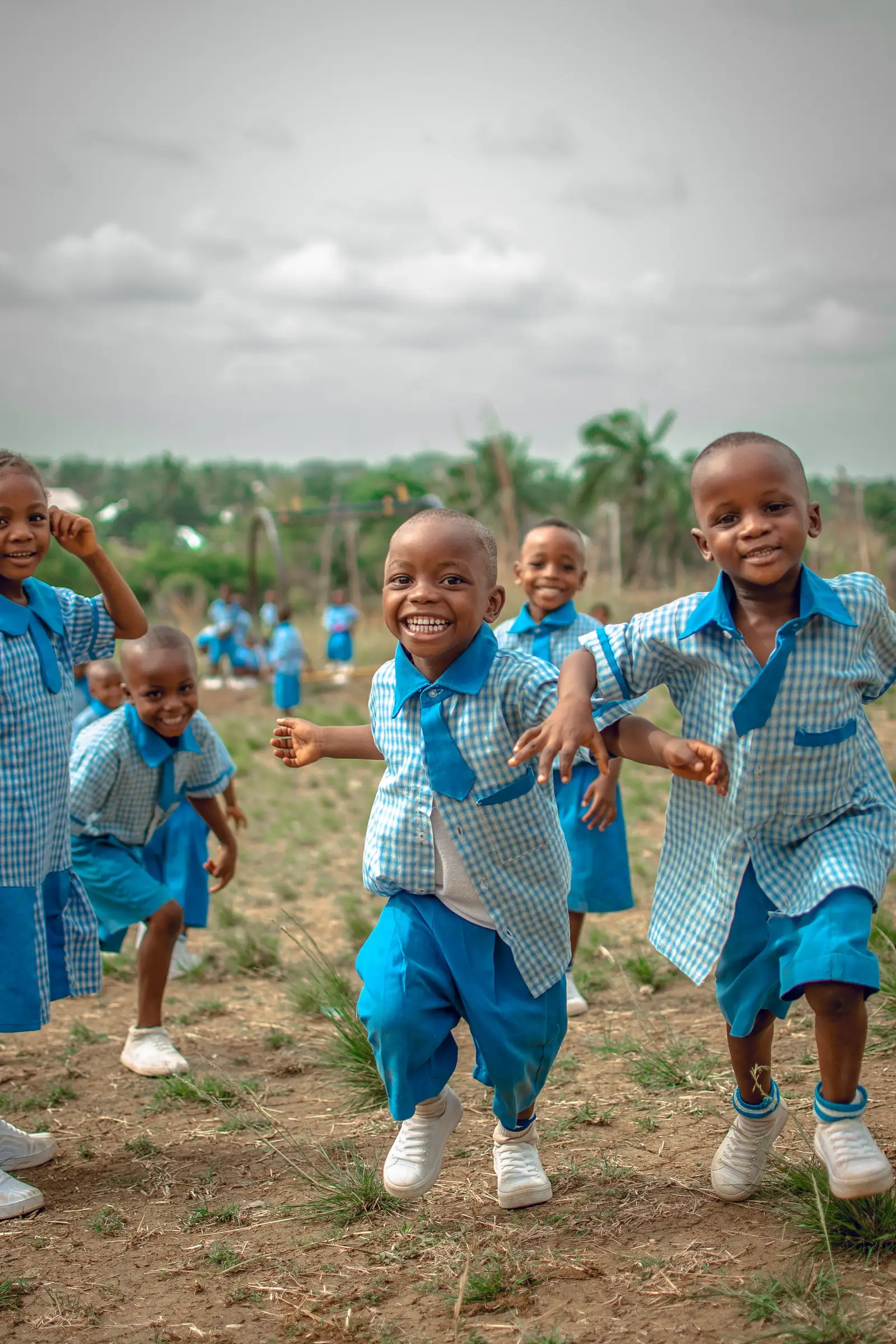
- Break, outsideForty minutes. Children who have run about learn better in the afternoon.
- Science or social studiesTaught where the equipment is, which is why Primary 3 keeps its own materials cupboard.
- Lunch, at tables, togetherHot food. Teachers eat with their class rather than supervising it.
- Yoruba, French or musicRotating, so no child spends a whole year being the one who is not good at the Tuesday subject.
- ClubsChess, choir, gardening, coding. Chosen by the child each term, not assigned.
- HomeNothing to finish at the kitchen table before Primary 4, and never at the weekend.
What we are strict about
Plenty of things at a primary school are a matter of taste. Three are not, and these are ours.
- Reading before everything
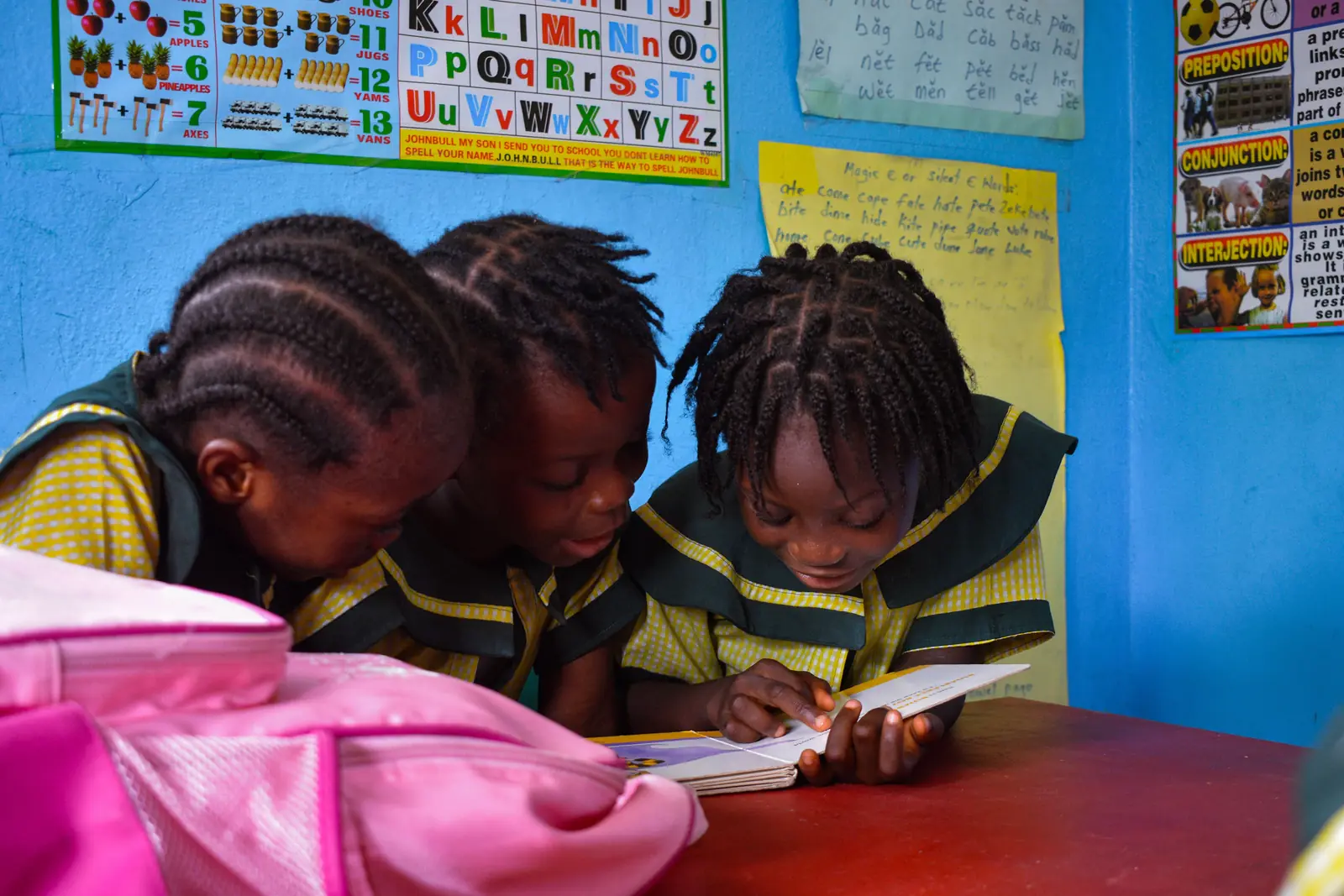
- A child who cannot read fluently by Primary 3 spends the next nine years behind in every subject, not one. So reading is the first lesson of every day, and every child is heard reading aloud by an adult twice a week.
- Twenty-four, and we mean it
- We cap classes at twenty-four and open a second stream rather than admit the twenty-fifth. It is the most expensive promise on this page and the only one a parent can check on a tour: count the desks.
- Common entrance is a consequence
- We prepare for the entrance examinations of the secondary schools our families choose, in Primary 4 and 5, in school hours. We do not run Saturday coaching, and we do not teach the paper for four years.
Nine years, three stages
A child can start at two and leave at eleven ready for secondary school. Each stage is taught the way children of that age learn.
- KG 1
- KG 2
Kindergarten
Ages 2 to 4
Talking, listening and playing alongside other children, and the habits of a school day: a coat on a peg, a turn in a queue.
- N1
- N2
Nursery
Ages 4 to 6
Letters, sounds and numbers through play, so a child arrives in Primary 1 ready to be taught to read rather than starting from the beginning.
- P1
- P2
- P3
- P4
- P5
Primary
Ages 6 to 11
Reading fluently by the end of Primary 3, then more independent work, the first homework, and common entrance in Primary 4 and 5.
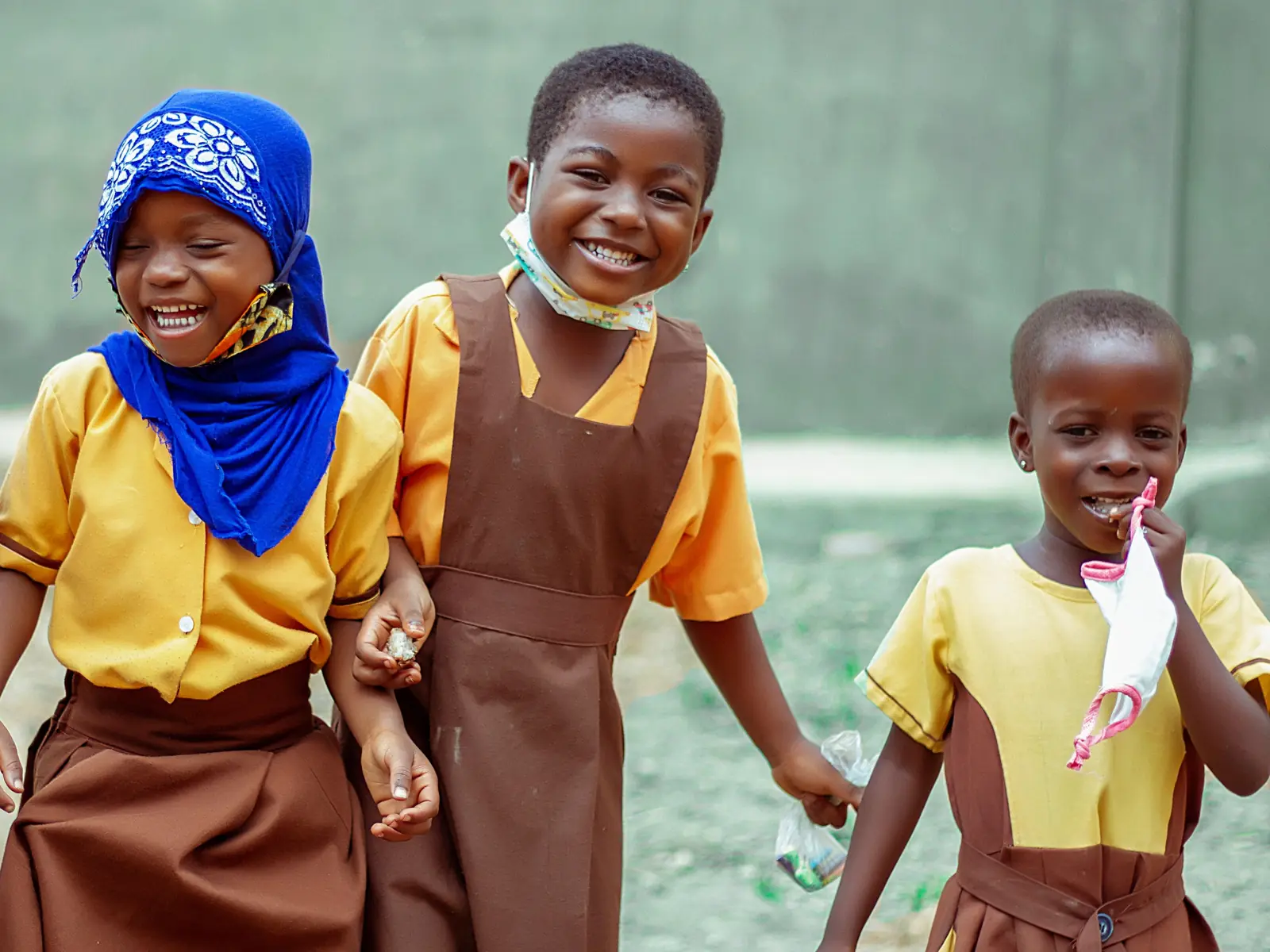
After lunch, their choice
Every afternoon ends with clubs, and each child chooses theirs at the start of term. Languages and music rotate through the week so nobody is stuck with one subject all year.
- Chess
- Choir
- Gardening
- Coding
- Yoruba
- French
- Music
Come on a Tuesday
Tours run during lessons, not after school, because an empty school tells you nothing. You will see the classes as they are: noisy in the right places.
- Book a visitCall or email the admissions office and pick a morning.
- Tour during lessonsAbout an hour, with time to ask the questions that matter to you.
- A morning in classFrom Primary 2 up, your child spends a morning in the class they would join. It is not an examination.
Already a parent here?
Report cards, attendance, fees and messages from your child’s teacher are in the parent portal.